

Keto for Beginners: Your Complete, Easy 2026 Start Guide
Medical note: I’m Tristina — a home cook and keto researcher, not a doctor or dietitian. This guide is educational, not medical advice. If you have a health condition or take medication, talk to your doctor before starting keto (see the Reality-Check section below).

Keto for beginners, in plain English: you eat mostly fat, a moderate amount of protein, and very few carbs, so your body runs out of sugar to burn and switches to burning fat for fuel instead. Most beginners keep net carbs under 20–30 grams a day, eat real whole foods, and salt their food well to dodge the “keto flu.” That’s the whole game.
If you’ve been staring at a keto food list wondering where to even begin, I get it — the internet makes this feel way more complicated than it is. So here’s my honest promise for this guide: no fluff, no fake before-and-afters, just the exact basics I’d give a friend starting keto this week. I’ll walk you through what keto is, how ketosis works, your macros, what to eat, a sample day, the keto flu, the mistakes to skip, and a simple first-week plan. My personal reason for starting this journey is quite simple: I wanted to end my dependence on sugar. As someone who loves cooking at home, Keto opened up a completely new perspective for me on using whole foods to truly nourish the body.
📌 Want the shortcut? Grab my free Keto Cheat Sheet — a 2-page printable with your macros, the eat-this/skip-that food list, and net carbs on one page
Table of Contents
What Is the Keto Diet?
The keto (ketogenic) diet is a low-carbohydrate, high-fat way of eating that flips your body’s fuel source from sugar to fat. Normally your cells run on glucose from carbs. When you cut carbs low enough, your liver starts turning fat into ketones — an alternative fuel your brain and body can use. That fat-burning state is called ketosis, and reaching it is the whole point of keto.
It helps to know the scale of the switch. Harvard’s Nutrition Source notes the brain alone demands a steady supply of about 120 grams of glucose per day, so once you stop feeding it carbs, your body has to find another way — and fat becomes the answer. Keto isn’t a gimmick, either: doctors have used it since the 1920s to help manage epilepsy. For beginners, the takeaway is simple — eat fat and protein, cut carbs, and let your body do the rest.
The 3 Types of Keto (and Which to Pick as a Beginner)
You may see keto split into a few versions, and it’s easy to overthink this. Healthline describes several: the standard ketogenic diet (SKD) — very low carb, high fat, moderate protein — plus cyclical keto (scheduled carb “refeed” days), targeted keto (carbs around workouts), and high-protein keto. They exist for different goals, mostly athletic ones.
My advice for keto for beginners? Ignore the fancy versions. Start with standard keto. The cyclical and targeted approaches are built for athletes and experienced dieters who already know how their body handles carbs. As a beginner, adding “refeed days” before you’ve even adapted is a fast way to stall out and get discouraged.
Keep it simple: eat low-carb, high-fat, moderate-protein meals every day, consistently, for a few weeks. Once keto feels like second nature and you have a real reason to tweak it, you can explore the variations. Until then, standard keto is the clear winner — and the version this entire guide is built around.
Keto vs. Low-Carb: What’s the Difference?
People use “keto” and “low-carb” interchangeably, but they’re not quite the same — and the difference matters when you’re starting out. A general low-carb diet simply reduces carbs (often 50–150 g a day) without necessarily aiming for ketosis. Keto is stricter: you drop carbs low enough — under 20–30 g net to start — that your body actually switches into fat-burning ketosis.
So think of keto as the deep end of low-carb. Both cut sugar and starch, both can help with weight and blood sugar, but only keto is designed to reliably reach and hold ketosis. If the strict carb limit feels intimidating on day one, it’s completely fine to ease in by going low-carb first, then tightening down to keto over a week or two. That gentler ramp can even soften the keto flu. The destination is the same — you’re just choosing your on-ramp.
How Ketosis Works — and How Long It Takes
Ketosis is the metabolic state where your body burns fat (as ketones) for most of its energy instead of glucose. Here’s the chain reaction: you eat very few carbs, so your body first burns through its stored glucose. Harvard’s Nutrition Source explains that after roughly 3–4 days of low carbs, those glucose stores run down, insulin drops, and the liver begins producing ketones from fat.
So how long until you’re actually in ketosis? Keeping carbs strict, most people reach it in about 2–4 days (usually around day 4), according to WebMD — though it can take a week or longer depending on your body, activity, and what you ate before starting. You don’t need to obsess over testing strips as a beginner. If you’ve genuinely cut carbs low and stayed consistent for a few days, ketosis is happening. Patience here beats panic — your body is rewiring its entire fuel system. For a deeper dive into the science and a full day-by-day timeline, see my what is ketosis guide.
📌 Not sure a food counts as “low carb”? My free Keto Cheat Sheet sorts it out: the eat/skip list with net carbs on one page.
How to Tell You’re Actually in Ketosis
You don’t need gadgets to know keto is working, but a few honest signs tell you your body has made the switch. The most common ones: a noticeable drop in appetite and cravings, steadier energy once you’re past the first week, sharper focus, and “keto breath” — a slightly fruity or metallic taste caused by a ketone called acetone. That breath is temporary and usually fades as you adapt.
If you like data, you can measure ketones three ways: inexpensive urine strips (fine for beginners, though they lose accuracy over time), a breath meter, or a blood ketone meter (the most accurate). Honestly, though? As a beginner you don’t need to test at all. If you’ve truly kept carbs low and consistent for several days, ketosis is happening — your energy and shrinking cravings will tell you more than a strip will. Save your money for good food, not gadgets.
Keto Macros: How Much Fat, Protein, and Carbs?
“Macros” just means your daily split of fat, protein, and carbs. On keto, fat leads, protein stays moderate, and carbs are tiny. Per Harvard’s Nutrition Source, popular ketogenic plans land around 70–80% of calories from fat, 10–20% from protein, and 5–10% from carbs. On a 2,000-calorie day that’s roughly 165 g fat, 75 g protein, and 40 g carbs.
The number beginners care about most is carbs. Diet Doctor recommends starting under 20–30 g of net carbs per day, and generally staying below 50 g, to reliably reach ketosis. “Net carbs” means total carbs minus fiber. Keep protein moderate — not sky-high — because your body can convert excess protein into glucose and stall ketosis. Save this quick reference:
| Macro | % of daily calories | Example (2,000 cal/day) |
|---|---|---|
| Fat | 70–80% | ~165 g |
| Protein | 10–20% (moderate) | ~75 g |
| Carbs | 5–10% | ~40 g total · aim <20–30 g net to start |
Net carbs = total carbs − fiber. Sources: Harvard Nutrition Source (split), Diet Doctor (carb target).
Want to turn these percentages into your own personal numbers? My keto macros guide walks through the exact calculation in four easy steps.
What You Can Eat on Keto (and What to Skip)
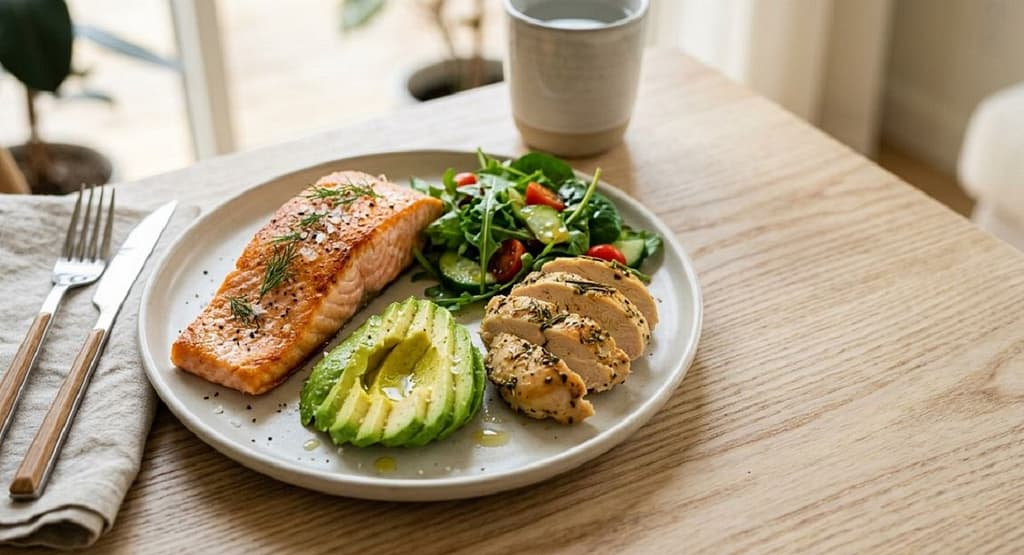
This is where keto for beginners gets easy: you build meals from whole, low-carb foods and skip the sugary, starchy stuff. Your plate becomes protein + healthy fat + non-starchy veg. Think eggs, meat, fish, cheese, avocado, olive oil, and leafy greens. What goes away: bread, pasta, rice, potatoes, sugar, and most fruit.
A simple rule that keeps beginners on track: favor single-ingredient foods, and read labels on anything packaged. Sugar hides under a dozen names — dextrose, maltodextrin, cane juice — and a “healthy” sauce or yogurt can blow your whole carb budget in one serving. When in doubt, choose the food that doesn’t need a label at all. You don’t have to memorize a giant list to start; this table covers about 90% of real beginner meals, so screenshot it for your next grocery run:
| Eat freely | Skip (or save for rare treats) |
|---|---|
| Meat, poultry, eggs, fish & seafood | Bread, pasta, rice, cereal, oats |
| Avocado, olive oil, butter, coconut oil | Sugar, candy, soda, most desserts |
| Leafy greens, broccoli, cauliflower, zucchini, peppers | Potatoes, corn, and other starchy veg |
| Cheese, heavy cream, full-fat Greek yogurt | Most fruit (bananas, apples, grapes) |
| Nuts & seeds (pecans, macadamia, almonds) | Beans, lentils, and other legumes |
| Berries in small amounts | Fruit juice, sweetened coffee drinks |
Want the full breakdown? My complete keto food list and store-by-store keto grocery list go deeper.
What a Day of Keto Looks Like
Beginners always ask, “But what do I actually eat all day?” Honestly, keto meals are simpler than what most people cook now — fewer ingredients, less measuring. You’re just swapping the carb on your plate for extra veg or fat. No exotic products required, and leftovers are your best friend.
Here’s a realistic, beginner-friendly day that lands comfortably inside your carb budget:
| Meal | Example | Why it works |
|---|---|---|
| Breakfast | Scrambled eggs in butter + avocado | High fat, near-zero carbs, keeps you full |
| Lunch | Big salad with grilled chicken, olive oil & cheese | Protein + fat + fiber, easy to prep ahead |
| Dinner | Salmon with roasted broccoli in olive oil | Omega-3s, low-carb veg, filling |
| Snack | A handful of macadamia nuts or cheese | Fat-forward, no blood-sugar spike |
A few beginner notes: drink plenty of water, salt your food (yes, really — it fights the keto flu), and don’t be afraid to repeat meals. Eating the same easy breakfast every day is a feature, not a failure — it removes decisions and keeps you on plan. Notice there’s also no calorie math here. As a beginner, nailing your carb limit and eating until satisfied gets you roughly 80% of the results with 20% of the effort.
Keto Snacks & Eating Out Without Slipping
Real life includes snacks and restaurants, and keto handles both fine once you know the moves. For snacks, lean on simple fat-and-protein options that don’t spike blood sugar: cheese, olives, hard-boiled eggs, a handful of nuts, beef jerky (check for added sugar), or veggie sticks with guacamole. Keep a couple on hand so hunger never forces a bad carby choice.
Eating out is easier than people fear. The trick is one swap: replace the starch. Order a bunless burger with a side salad instead of fries, fajitas without the tortillas, or a steak with extra vegetables. Watch the hidden carbs — sugary sauces, breaded coatings, and sweet dressings are where keto meals quietly go sideways, so ask for oil and vinegar or sauce on the side. You don’t have to be the difficult one at the table; you just have to know where the carbs like to hide.
The Real Benefits of Keto — the Honest Version
Let’s talk about the benefits of keto for beginners without the hype. Research links keto to real short-term wins: weight loss, reduced appetite and cravings, and improvements in blood sugar, insulin, and triglycerides. Many beginners are surprised how much less hungry they feel — that appetite drop is often the very reason the weight comes off.
Here’s the honest caveat I won’t skip: Harvard’s Nutrition Source points out that when you compare keto to conventional weight-loss diets at the one-year mark, the difference largely disappears — partly because keto is hard to stick with long-term.
In other words, keto isn’t magic; it’s a tool. It works best when it fits your life and you can actually maintain it. Some people thrive on it for years; others use it for a focused stretch, then loosen up. Both are valid. Judge keto by how you feel and whether you can keep it up — not by a stranger’s transformation photo.
The Keto Flu — and How to Beat It
The “keto flu” is the rough patch some people hit in the first week: headache, fatigue, irritability, muscle cramps, or brain fog. It’s not a real flu. As Healthline explains, when you cut carbs, insulin falls and your kidneys flush out extra sodium and water — and with that water go the electrolytes your body needs. Fix the electrolytes and you usually fix the symptoms.
Timing-wise, keto flu tends to start within the first few days and peak around week one. A 2020 review in Frontiers in Nutrition found symptoms most often resolve in about 4–5 days, with a minority of people feeling it for up to a few weeks. The main fix is minerals — and salting your food is step one:

| Electrolyte | Common daily target on keto |
|---|---|
| Sodium | 3,000–5,000 mg |
| Potassium | 3,000–4,700 mg |
| Magnesium | 300–500 mg (supplement ≤ 400 mg) |
For reference, 1 teaspoon of salt ≈ 2,300 mg of sodium, so a couple of salted meals and a cup of broth go a long way. My full keto flu guide and electrolyte powder review cover this in depth. (Targets: Virta Health, Diet Doctor, Cleveland Clinic.)
7 Common Keto Mistakes Beginners Make
Most people who “fail” at keto aren’t failing — they’re making one of a handful of fixable rookie mistakes. Knowing them in advance is honestly half the battle. Here are the big ones I see over and over:
- Ignoring electrolytes — the #1 cause of keto flu. Salt your food and hydrate.
- Not tracking hidden carbs — sauces, dressings, and “just a bite” add up fast.
- Eating too much protein — excess can convert to glucose and slow ketosis.
- Fearing fat — fat is your fuel now; low-fat + low-carb just leaves you starving.
- Cutting all vegetables — non-starchy veg give you fiber and minerals. Keep them.
- Living on “keto” packaged snacks — many stall progress. Eat real food first.
- Expecting overnight results — give your body a few weeks to adapt.
I break each of these down (with the fixes) in my dedicated keto mistakes for beginners guide.
Your First Week on Keto: A Simple Start Plan
If one section matters most in keto for beginners, it’s this one.
You don’t need a perfect plan — you need a start. Here’s the approach I recommend: clear the obvious carbs from your kitchen, shop the food list, and eat simple protein-plus-fat meals. A helpful trick is to start on a Thursday so the hardest days (3–4) land on the weekend when you can rest. Here’s what to expect, day by day — save this table for your fridge:
| Day | Focus | How you may feel | Your fix |
|---|---|---|---|
| 1–2 | Cut carbs, eat simple, hydrate | Pretty normal | Salt your meals from day one |
| 3–4 | Push through the dip | Keto flu may hit — tired, headachy | Broth + water + electrolytes; rest |
| 5–6 | Stay the course | Energy starting to return | Keep meals consistent |
| 7 | You’re finding your rhythm | Clearer head, fewer cravings | Plan next week’s meals |
Want the detailed version? My step-by-step how to start keto in 7 days walks through each day. And if money’s a worry, keto on a budget shows how to do this with eggs, ground beef, and frozen veg.
📌 Ready to start this week? Take my free printable Keto Cheat Sheet (macros, food list + net carbs) with you.
How Long Should You Stay on Keto?
There’s no single right answer, and anyone who gives you an exact number is guessing. Many people follow keto strictly until they reach a goal, then loosen into a lower-carb-than-before maintenance style — some keep a few keto days a week, others cycle it by season. Keto appears safe for most healthy people over the medium term, and plenty stick with it for years.
The honest gap: there isn’t strong data on staying in strict ketosis for decades, and Harvard notes long-term safety questions remain open. So my take for beginners is to think in chapters, not “forever.” Give it a committed 8–12 weeks to judge how your body and life respond. If you feel great and it’s sustainable, keep going. If it’s a grind, a well-built low-carb diet still delivers most of the benefits with more flexibility. Sustainable always beats strict.
Keto Reality-Check: Who Should Skip It & What Won’t Happen
Honesty matters more than hype here — this is the part of keto for beginners nobody likes to say out loud. Keto is safe for most healthy people, but it’s genuinely not for everyone. Talk to your doctor first if you’re pregnant or breastfeeding, have kidney, liver, or pancreas disease, have a history of an eating disorder, or take medication for blood pressure or diabetes. One hard warning: if you take an SGLT2 inhibitor for type 2 diabetes, combining it with keto can raise your risk of a dangerous condition called diabetic ketoacidosis (DKA) — check with your doctor before starting.
And let’s set expectations so you don’t quit on day 5 feeling cheated: that fast “whoosh” of weight in week one is mostly water, not fat. Carbs make your body hold water; burn through them and the water leaves too. Real fat loss is steadier and shows up after your body adapts. Knowing this upfront is exactly what keeps beginners from giving up right before it gets good. (Sources: Healthline, Virta, Diet Doctor, National Lipid Association.)
Keto for Beginners: FAQ
-
How long does it take to get into ketosis?
Keeping carbs strict, most people reach ketosis in about 2–4 days (often around day 4), per WebMD. It can take a week or longer depending on your metabolism, activity, and what you ate beforehand.
-
What can I eat on keto?
Meat, fish, eggs, cheese, avocado, olive oil, nuts, and non-starchy veg like leafy greens, broccoli, and zucchini. You avoid bread, pasta, rice, potatoes, sugar, and most fruit. See the food table above.
-
How many carbs can I have?
Start under 20–30 g of net carbs per day (net = total carbs − fiber), and generally stay below 50 g, per Diet Doctor. Lower is more reliable for reaching ketosis as a beginner.
-
Is keto safe?
For most healthy people, yes. But if you’re pregnant, have kidney/liver/pancreas disease, an eating-disorder history, or take blood-pressure or diabetes medication (especially SGLT2 inhibitors), talk to your doctor first.
-
How much weight will I lose the first week?
Often several pounds — but it’s mostly water, not fat. Steady fat loss follows once your body adapts, so don’t judge keto by week one.
-
Do I have to count macros?
Not strictly. As a beginner, just hit your carb limit and eat protein + fat until satisfied. Precise tracking helps later if progress stalls.
-
Can I drink coffee or alcohol on keto?
Coffee and tea are fine — skip the sugar and sweetened creamers; heavy cream is okay. Alcohol slows fat-burning and lowers willpower, but dry wine and plain spirits (no sugary mixers) are lower-carb options if you choose to drink.
-
Will I lose muscle on keto?
Not if you eat enough protein and stay active. Keto keeps protein moderate — not low — specifically to protect muscle. Add some resistance movement (even walking plus bodyweight exercises) to help hold onto lean mass.
Everything here is educational and honest to the best of my research. It isn’t medical advice — please loop in your doctor for your personal situation. You’ve got this. — Tristina


