

Keto Food List: Your Complete 2026 Eat & Avoid Guide
Medical note: I’m Tristina — a home cook and keto researcher, not a doctor or dietitian. This guide is educational, not medical advice. If you have a health condition or take medication, talk to your doctor before making a big diet change.
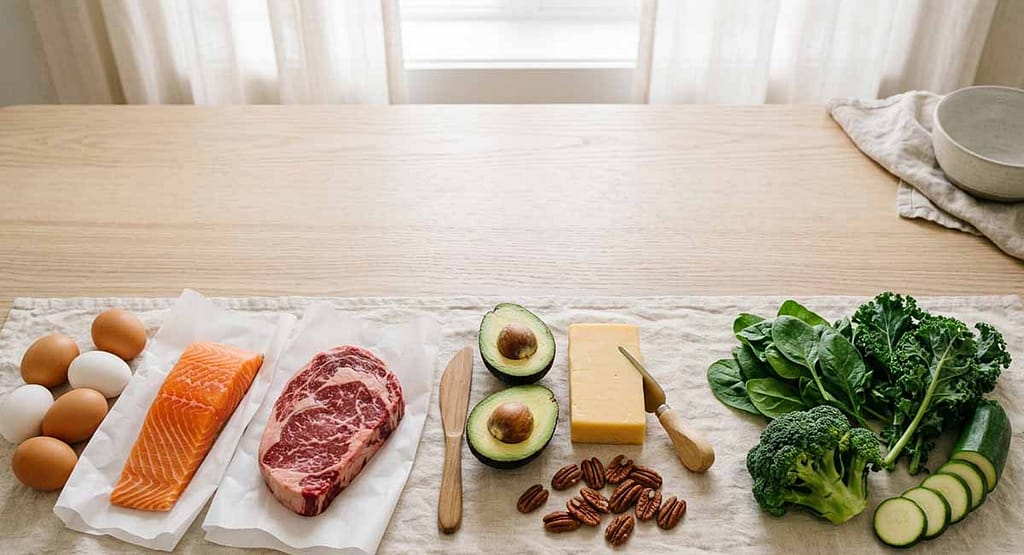
Keto food list, in one line: eat protein, healthy fats, and non-starchy vegetables freely; add cheese, nuts, and a few berries with care; and avoid grains, sugar, starchy vegetables, and most fruit. Keep it to real, single-ingredient foods and stay under 20–30 grams of net carbs a day, and you’re doing keto right.
If you’ve ever stood in the kitchen holding something and thought “wait — can I even eat this on keto?”, this keto food list is the answer you’ll come back to. I built it the way I wish someone had handed it to me: organized by food group, with the actual net-carb number next to each food so you’re never guessing. No fluff, no fake transformation stories — just what to put on your plate and what to leave on the shelf. The biggest surprise for me when I started was fruit. I always thought eating an apple was a healthy choice, until I realized its natural sugar was quietly undoing all my low-carb efforts for the entire day.
📌 Want the whole list on one page? Grab my free Keto Cheat Sheet — a quick eat-this / skip-that reference with net carbs.
Table of Contents
The Simple Rule Behind Every Keto Food List
Before the tables, here’s the rule that makes the whole list make sense: on keto you eat whole foods built from fat, protein, and non-starchy vegetables, and you cut the carbs low enough to burn fat for fuel. In practice that means staying under 20–30 grams of net carbs per day to start — and generally below 50 grams — according to Diet Doctor. “Net carbs” means total carbs minus fiber, because fiber doesn’t spike your blood sugar. Stick with the foods below and most people reach ketosis — the fat-burning state that’s the whole point — in about 2–4 days (usually around day 4), per WebMD.
So the single question behind every food decision is simple: how many net carbs, and is it a real food or a processed one? Favor foods that don’t need a label, and you’ll rarely go wrong. Here’s the whole list at a glance — screenshot this one:
| Eat freely | Eat with care | Avoid |
|---|---|---|
| Meat, poultry, eggs, fish & seafood | Cheese, cream, full-fat yogurt | Bread, pasta, rice, cereal, oats |
| Avocado, olive oil, butter, coconut oil | Nuts & seeds (portion-aware) | Sugar, candy, soda, most desserts |
| Leafy greens, broccoli, cauliflower, zucchini | Berries in small amounts | Potatoes, corn, other starchy veg |
| Water, black coffee, plain tea | Dry wine, plain spirits (occasional) | Fruit juice, most fruit, beans & legumes |
Keto Foods to Eat: Protein & Seafood
Protein is the easy part of keto — most unprocessed meat, poultry, eggs, fish, and seafood are close to zero net carbs, so you can eat them freely. Build your plate around them: beef, pork, lamb, chicken, turkey, eggs, salmon, tuna, sardines, shrimp, and other shellfish all fit. Fatty cuts are a feature, not a problem — fat is your fuel now.
Two honest cautions keep beginners out of trouble. First, watch what’s added to protein: breaded coatings, flour-thickened gravies, sugary marinades, and sweet-cured or honey-glazed meats sneak carbs onto an otherwise-perfect food. Second, don’t fear the fat or over-buy “lean” everything — you want the fat for energy and satiety. When you can, choose fattier cuts, eggs with the yolk, and cold-water fish like salmon for the omega-3s. Keep protein moderate rather than sky-high, season well, and this whole category basically takes care of itself.
Keto Vegetables: The Best Low-Carb Picks
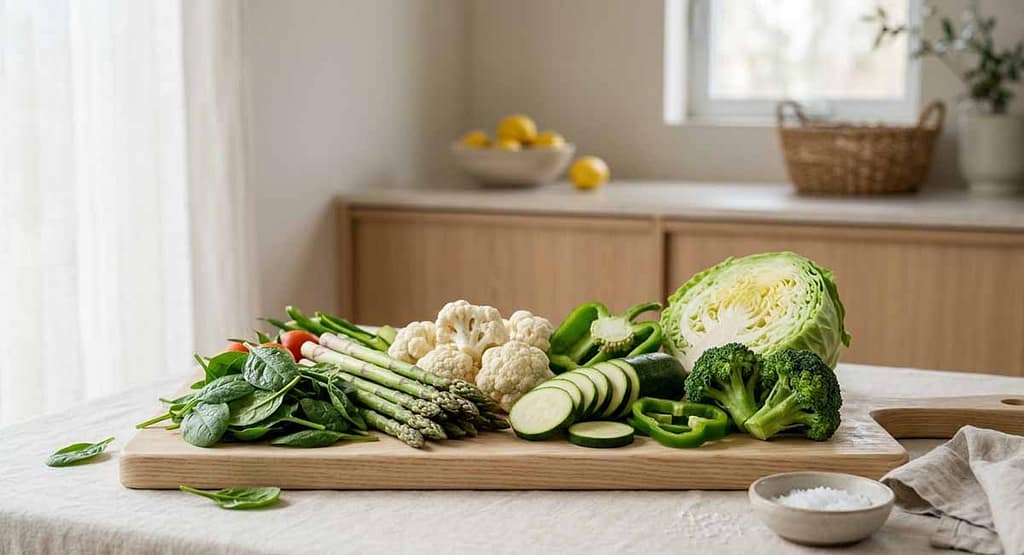
Vegetables are where keto beginners get nervous, but the rule is easy: eat vegetables that grow above ground, skip the ones that grow below it. Leafy greens and other above-ground veg are low in carbs and high in fiber and minerals; root vegetables like potatoes, carrots, and beets store starch and add up fast. Aim to fill half your plate with the low-carb options below.
Here are common keto vegetables with their net carbs per 100 grams (about 3½ ounces), per Diet Doctor — save this for your next produce run:
| Vegetable | Net carbs (per 100 g) |
|---|---|
| Spinach | 1 g |
| Asparagus | 2 g |
| Avocado | 2 g |
| Cauliflower | 3 g |
| Zucchini | 3 g |
| Cabbage | 3 g |
| Bell pepper (green) | 3 g |
| Broccoli | 4 g |
| Green beans | 4 g |
Anything under about 5 g net carbs per 100 g is hard to overdo — leafy greens, zucchini, cucumber, and cabbage are near-freebies.
Healthy Fats & Oils to Cook With
On keto, fat moves from “the enemy” to “the main event,” so it’s worth knowing which ones to reach for. The best everyday cooking fats are the natural, minimally processed ones: olive oil, avocado oil, butter, ghee, and coconut oil. They’re essentially zero-carb, they carry flavor, and they help you feel full between meals. Extra-virgin olive oil for salads and finishing, butter or avocado oil for higher-heat cooking — that covers almost everything.
The honest nuance: not all fat is health food. Whole-food fats like avocado, olives, nuts, fatty fish, and cheese come with nutrients attached, so lean on those. It’s smart to go easy on heavily processed options and to avoid artificial trans fats (partially hydrogenated oils) entirely, since those are the ones linked to heart risk. You don’t need special “keto” oils or MCT powders to succeed — a good bottle of olive oil and real butter will take you further than anything with a supplement label.
Dairy, Nuts & Seeds
Full-fat dairy is keto gold: cheese, heavy cream, butter, and full-fat Greek or plain yogurt are high in fat, low in carbs, and endlessly useful. Hard and aged cheeses are lowest in carbs; watch milk and sweetened yogurts, which carry more sugar than people expect. If dairy bothers your stomach or stalls you, it’s fine to keep it light — it’s optional, not mandatory.
Nuts and seeds are the perfect keto snack, but they’re the category where “just a handful” quietly turns into three. Portion matters, because the net carbs vary a lot by nut. Here’s the net carbs per 100 grams, per Diet Doctor:
| Nut / seed | Net carbs (per 100 g) |
|---|---|
| Pecans | 4 g |
| Macadamia nuts | 5 g |
| Walnuts | 7 g |
| Almonds | 9 g |
| Cashews (limit) | 22 g |
Pecans and macadamias are your everyday picks; cashews are basically candy on keto — a small handful can eat your whole carb budget.
Fruit on Keto: Berries Yes, Everything Else No
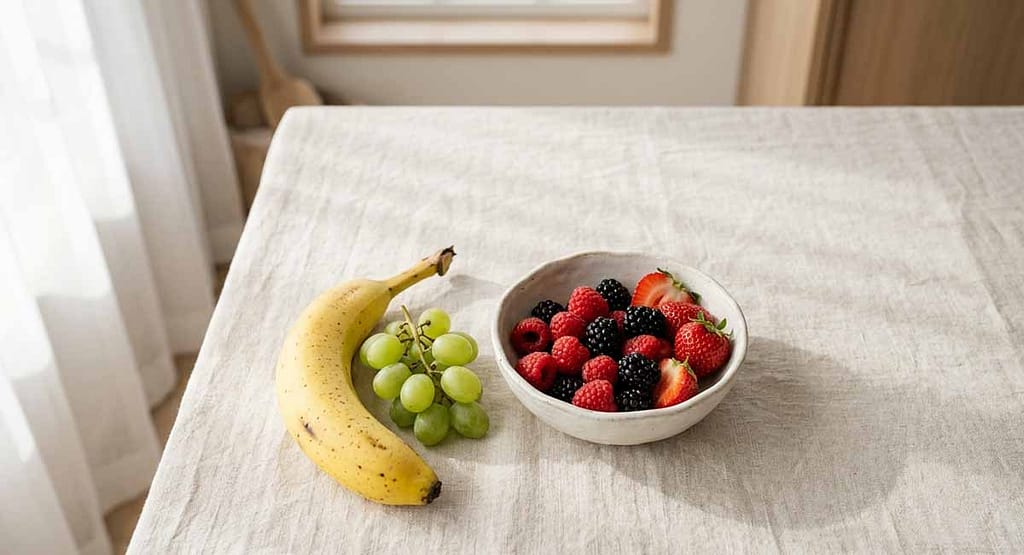
Fruit is the most confusing part of any keto food list, so here’s the clean version: berries in small amounts are fine; almost everything else isn’t. Fruit is nature’s candy — mostly sugar — and even “healthy” fruits blow past your carb limit fast. Berries are the exception because they’re lower in sugar and higher in fiber. Compare the net carbs per 100 grams from Diet Doctor and you can see why:
| Keto-friendly berries (per 100 g) | Fruit to avoid (per 100 g) |
|---|---|
| Raspberries — 5 g | Watermelon — 7 g |
| Blackberries — 5 g | Orange — 9 g |
| Strawberries — 6 g | Apple — 12 g |
| Blueberries — 12 g (limit) | Grapes — 16 g |
| Banana — 20 g |
Notice blueberries land at 12 g — double the raspberries — so treat them as a small topping, not a bowl. A few berries over Greek yogurt is a perfect keto dessert; a banana is a carb bomb.
📌 Don’t want to memorize all this? My free Keto Cheat Sheet keeps the eat/avoid list and net-carb counts on one screen you can pull up at the fridge or the store.
Keto Drinks: What to Sip (and Skip)
Drinks are where a clean keto day quietly falls apart, because liquid sugar counts too. The safe list is short and satisfying: water, sparkling water, black coffee, and unsweetened tea, all essentially zero-carb. Coffee and tea are totally fine — just skip the sugar and sweetened creamers; a splash of heavy cream is keto, a caramel latte is not. Salted water or broth actually helps in your first week by replacing electrolytes.
What to skip: soda, fruit juice, sweetened iced tea, sports drinks, sugary coffee shop drinks, and most smoothies — they’re carb bombs even when they’re marketed as healthy. Alcohol is a “sometimes” at best: beer is liquid bread, and sweet cocktails are loaded with sugar. If you drink, the lower-carb choices are dry wine or plain spirits with soda water — and expect alcohol to slow fat-burning while it’s in your system. When in doubt, reach for water; hydration is half of feeling good on keto.
Foods to Avoid on Keto
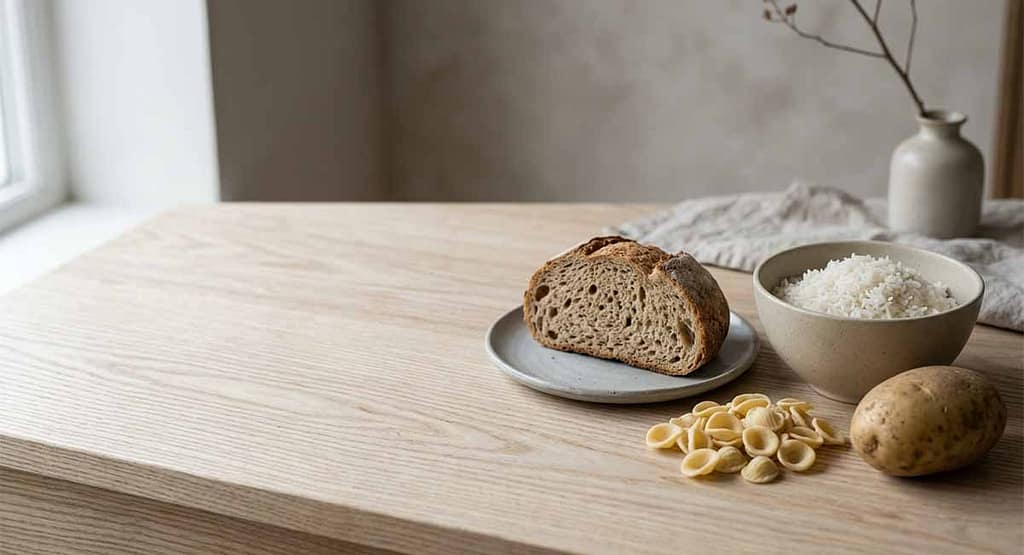
The “avoid” list is shorter than the “eat” list, and it comes down to two things: sugar and starch. Cut these and you’re 90% of the way to ketosis. Everything here spikes blood sugar and quietly pushes you over your 20–30 g net-carb limit, often in a single serving.
| Category | Skip these |
|---|---|
| Grains & starches | Bread, pasta, rice, cereal, oats, tortillas, crackers |
| Sugar & sweets | Candy, cookies, cake, ice cream, honey, syrup, soda |
| Starchy vegetables | Potatoes, sweet potatoes, corn, peas, beets |
| Most fruit | Bananas, apples, grapes, oranges, mango, dried fruit |
| Legumes | Beans, lentils, chickpeas |
| Low-fat “diet” foods | Low-fat yogurt, fat-free dressings, processed snacks |
One rule covers the gray areas: if it’s built on flour, sugar, or a starchy root, leave it. Healthline notes that even “healthy” whole grains and legumes are too carb-dense for keto — so whole-wheat bread and brown rice are still off the list.
Sneaky Foods That Look Keto (But Aren’t)
This is the section most food lists skip — and it’s exactly where beginners get tripped up. These foods feel healthy or low-carb, so they slide onto your plate without a second thought, then quietly stall your progress. Here are the usual culprits and why they bite:
| “Looks keto” | The catch |
|---|---|
| Blueberries | 12 g net carbs per 100 g — double other berries |
| Cashews | 22 g net carbs per 100 g — the highest-carb common nut |
| Dried fruit | Sugar concentrated — raisins and dates are candy |
| Honey, agave, coconut sugar | Still sugar; they spike blood sugar like table sugar |
| Oat & most plant milks | Often sweetened; oat milk is high-carb (use unsweetened almond/coconut) |
| Flavored & low-fat yogurt | Loaded with added sugar — choose full-fat plain |
| “Sugar-free” candy (maltitol) | Still raises blood sugar and often stalls people |
| BBQ sauce, ketchup, teriyaki | Sugar is a top ingredient — check labels |
| Granola & protein bars | Most are sugar-and-oat bars in disguise |
The fix is boring but bulletproof: read the label, scan for sugar under its many names (dextrose, maltodextrin, cane juice, syrup), and when a food needs a marketing claim to seem healthy, be suspicious.
Keto-Friendly Doesn’t Mean Unlimited
Here’s the honest caveat I won’t skip, because it’s the quiet reason some beginners stall: “keto-friendly” is not the same as “eat as much as you want.” Those net-carb numbers are per 100 grams, and they add up. Cheese, nuts, and berries are all on the “eat” list — but graze on them all day and you can still cross your carb limit and eat well past hunger.
So use the list the way it’s meant to be used: build meals from protein, fat, and non-starchy veg; treat nuts, cheese, and berries as add-ons, not the main event; and eat until you’re satisfied, not stuffed. You don’t need to weigh every gram — just stay aware that “low-carb” foods still count, and that portion is what turns a good food list into real results. Simple, whole, and reasonable beats perfect every time.
📌 Ready to turn this list into a cart? My store-by-store keto grocery list lays it out aisle by aisle so you can shop in one trip. New to all of this? Start with my complete keto for beginners guide for the big picture, or follow how to start keto in 7 days to build your first week.
Keto Food List: FAQ
-
What can I eat on keto?
Meat, poultry, eggs, fish and seafood, non-starchy vegetables (leafy greens, broccoli, cauliflower, zucchini, avocado), healthy fats and oils, full-fat dairy, nuts and seeds, and small amounts of berries. Build every plate from protein + fat + low-carb veg.
-
What foods should I avoid on keto?
Grains (bread, pasta, rice, oats), sugar and sweets, starchy vegetables (potatoes, corn), most fruit, legumes (beans, lentils), and low-fat processed “diet” foods. If it’s built on flour, sugar, or a starchy root, skip it.
-
Can I eat fruit on keto?
Mostly no — fruit is high in sugar. The exception is berries in small amounts: raspberries, blackberries, and strawberries run about 5–6 g net carbs per 100 g. Skip bananas, grapes, apples, and oranges, which are far higher.
-
How many carbs can I have per day?
Start under 20–30 g of net carbs per day (net = total carbs − fiber), and generally stay below 50 g, per Diet Doctor. Lower is more reliable for reaching ketosis as a beginner.
-
Is cheese keto?
Yes — most cheese is high-fat and low-carb, which makes it a keto staple. Hard and aged cheeses are lowest in carbs. Watch sweetened dairy like flavored yogurt and milk, which carry more sugar.
-
Are potatoes or rice ever okay on keto?
No — both are too starchy for a keto carb budget. Swap them for lower-carb stand-ins: cauliflower rice or mash, zucchini noodles, or extra non-starchy vegetables.
Everything here is educational and honest to the best of my research — not medical advice. For your personal situation, loop in your doctor. Now go build a plate you’ll actually enjoy. — Tristina


