

What Is Ketosis? A Simple Guide (+ 2–4 Day Timeline)
Medical note: I’m Tristina — a home cook and keto researcher, not a doctor or dietitian. This guide explains ketosis in plain English; it’s educational, not medical advice. If you have a health condition or take medication, please talk to your doctor first (I cover exactly who should be careful in the safety section below).

What is ketosis? Ketosis is a natural metabolic state where your body, running low on carbs, switches from burning glucose (sugar) to burning fat for fuel. Your liver turns that fat into molecules called ketones, which power your brain and body. On a keto diet, most people reach ketosis in about 2–4 days.
In other words, ketosis is your body’s backup fuel system — and the entire keto diet is just a way of switching it on. It’s a normal process (you’re in mild ketosis every morning before breakfast), not a gimmick or a disease. In this guide I’ll walk you through what ketosis actually is, how it works, how long it takes, the day-by-day timeline, how to tell you’re in it, and — honestly — what it will and won’t do for you. Think of this as the science companion to my full keto for beginners guide.
📌 Want the shortcut? Skip the overwhelm and grab my free Keto Starter Kit — a printable food list + grocery list you can take straight to the store.
Table of Contents
What Is Ketosis? (In Plain English)
Ketosis is a metabolic state in which your body burns fat for most of its energy instead of carbohydrates. Here’s the plain-English version: your cells normally run on glucose (sugar) from the carbs you eat. When you cut carbs low enough, that sugar supply runs down, so your body turns to its backup fuel — fat.
Your liver breaks that fat into ketones, and those ketones become the main fuel for your muscles and even your brain. Cleveland Clinic describes ketosis as exactly that: a normal process where the body, short on glucose, breaks fat down into ketones to use for energy. For most healthy people it isn’t dangerous — it’s the same fuel-switch that happens when you fast overnight or skip a meal. Keto simply keeps you there on purpose.
One quick clarification, because beginners mix these up: ketosis is the state your body is in, while the keto diet is the eating pattern that gets you there. You can even reach ketosis by fasting — but the keto diet is the sustainable, food-based way to stay in it. That’s the whole goal of eating keto: reach ketosis, then hold it long enough to feel the benefits.
How Ketosis Works (Glucose → Ketones)
Ketosis works through a simple chain reaction. First, your body uses up the glucose circulating in your blood. Next, it taps glycogen — the stored carbs in your liver and muscles — and burns through that over a day or two. Once glycogen runs low, insulin falls and your liver starts converting fatty acids into ketones through a process called ketogenesis.
Those ketones — mainly beta-hydroxybutyrate, acetoacetate, and acetone — flow into your bloodstream and become your new fuel. This is exactly why keto is a high-fat diet: fat is now your primary energy source, so you eat around 70–80% of your calories from fat, per Harvard’s Nutrition Source. That acetone, by the way, is what causes the mildly fruity “keto breath” many beginners notice — a slightly annoying but harmless sign the switch is happening.
How Long Does It Take to Get Into Ketosis?
Keeping your carbs strict, most people reach ketosis in about 2–4 days (usually around day 4), according to WebMD. The key that unlocks it is carbs: you generally need to drop under 20–30 grams of net carbs a day to start, and stay below 50 g, per Diet Doctor. (“Net carbs” means total carbs minus fiber.) Your exact timing depends on your body. Healthline notes that very active people, or those already eating low-carb, can get there in as little as 24 hours — while someone coming off a high-carb diet with full glycogen stores may need a week or longer.
Bottom line for beginners: don’t panic if it isn’t instant. Stay consistent, keep carbs low, and your body will make the switch on its own schedule.
The Ketosis Timeline: What Happens Day by Day
Wondering what’s actually happening inside your body each day? Here’s the honest ketosis timeline — the one I wish I’d had when I started. Days 1–2 feel fairly normal as your body burns through its remaining glucose and glycogen. Days 3–4 are the turning point: glycogen runs low, ketone production ramps up, and most people slip into ketosis — which is also when the “keto flu” tends to hit hardest.
By days 5–7, ketone levels climb, cravings fade, and energy usually starts to rebound. After that, it takes a few more weeks to become fully “fat-adapted,” where your body runs smoothly on fat. Timelines vary person to person, so treat this as a map, not a stopwatch. Save the table below and check in against it — it’s weirdly reassuring on day 3.

| Timeframe | What’s happening in your body | What you may feel | Your move |
|---|---|---|---|
| Days 1–2 | Burning through blood glucose + glycogen stores | Fairly normal; maybe more thirst or hunger | Cut net carbs under 20–30 g; salt your food and hydrate |
| Days 3–4 | Glycogen depletes, insulin drops, liver ramps up ketones — you enter ketosis | Keto flu may hit: headache, fatigue, brain fog | Broth + water + electrolytes; rest (a Thursday start puts this on the weekend) |
| Days 5–7 | Ketone levels rising, body settling into ketosis | Cravings ease; energy and focus rebound; possible “keto breath” | Keep meals consistent — don’t add carbs back now |
| Week 2–4+ | Becoming fat-adapted — efficient at running on fat | Steadier energy, fewer cravings, more stable mood | Judge your results now, not in week 1 |
A couple of honest notes on that table. The keto flu, when it shows up, most often clears in about 4–5 days, though a minority of people feel it for up to a few weeks, per a 2020 review in Frontiers in Nutrition. And that dramatic weight drop in week one? It’s mostly water, not fat — more on that below. Want the full day-by-day action plan with meals? That lives in my step-by-step how to start keto in 7 days guide.
📌 Want this timeline on your fridge? It’s part of my free printable Keto Starter Kit — so you can glance at day 3 and know exactly what to do.
How to Tell You’re in Ketosis (Signs + Testing)
You don’t need gadgets to know keto is working — your body gives you signs. The most common ones: a noticeable drop in appetite and cravings, steadier energy after the first week, sharper focus, more frequent trips to the bathroom early on, and “keto breath” (that faintly fruity, nail-polish smell from the acetone you’re now producing).
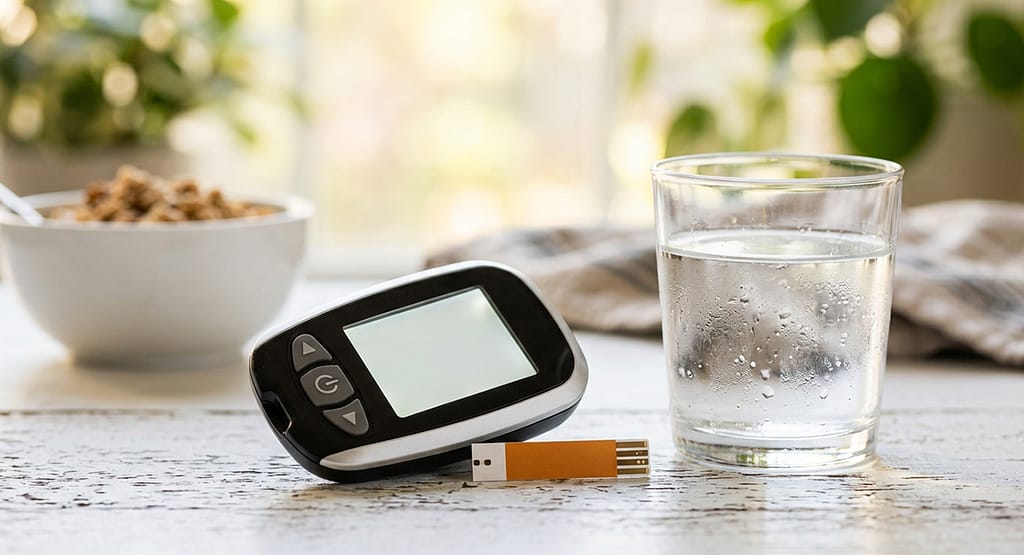
If you’d rather measure, there are three ways: cheap urine strips (fine for beginners, less accurate over time), a breath meter, or a blood ketone meter — the gold standard. Blood meters read beta-hydroxybutyrate, and nutritional ketosis is generally defined as 0.5–3.0 mmol/L, per Healthline. Below 0.5 and you’re not quite there yet. Here’s what the numbers mean, so you’re not chasing the wrong target:
| Blood ketones (mmol/L) | What it means |
|---|---|
| Below 0.5 | Not in ketosis yet — keep carbs low and stay patient |
| 0.5 – 1.5 | Light nutritional ketosis — the easiest range to sustain through food alone |
| 1.5 – 3.0 | Deeper (“optimal”) ketosis — often linked with strong fat-burning |
| Above 3.0 | No extra weight-loss benefit; usually comes from fasting, and isn’t a goal to chase |
Ranges via Healthline. Higher is not better — there’s no strong evidence that pushing past the middle of that range improves weight loss, so don’t chase big numbers.
Here’s my honest take: you probably don’t need to test at all. If you’ve genuinely kept carbs low and stayed consistent for several days, ketosis is happening — your shrinking cravings and steadier energy will tell you more than a strip will. Testing earns its keep if your progress stalls and you want to confirm you’re actually in ketosis. For most people starting out, though, it’s an optional expense. Save your money for good food.
How to Get Into Ketosis Faster
If you want to reach ketosis sooner rather than later, a few honest levers actually move the needle. First and biggest: get your carbs genuinely low — under 20–30 g net a day — because nothing speeds ketosis like removing the glucose that’s keeping you out of it. Second, watch hidden carbs in sauces, dressings, and “just a bite” snacks; they quietly add up and keep resetting the clock. Third, moving your body — even daily walks — helps burn through glycogen faster.
Some people also use a short overnight fast (simply pushing breakfast a few hours later) to speed things along, since fasting drains glycogen quickly. And don’t skip electrolytes: getting enough sodium, potassium, and magnesium — the three minerals Cleveland Clinic flags for keto — won’t just fight the keto flu; it keeps you feeling good enough to actually stick with it. My keto flu guide breaks down exactly how much of each to aim for.
Is Ketosis Safe? Ketosis vs. Ketoacidosis
This is the fear I hear most, so let’s clear it up: for most healthy people, nutritional ketosis is safe — but it is not the same as ketoacidosis, and confusing the two causes a lot of needless worry. Nutritional ketosis keeps ketones in a controlled range (roughly 0.5–3.0 mmol/L), with your own insulin keeping them in check. Diabetic ketoacidosis (DKA) is a dangerous medical emergency where ketones and blood sugar climb sky-high — it mainly affects people with diabetes, and ketone levels run many times higher than on keto.
They are not the same thing. That said, keto genuinely isn’t for everyone. Please talk to your doctor first if you’re pregnant or breastfeeding, have kidney, liver, or pancreas disease, or have a history of an eating disorder. One hard warning: if you take an SGLT2 inhibitor for type 2 diabetes, combining it with keto can raise your risk of DKA — check with your doctor before you start.
What Ketosis Won’t Do (Honest Expectations)
Because I promised honesty, here’s what ketosis won’t do — so you don’t quit on day 5 feeling cheated. It won’t melt fat overnight. That fast “whoosh” of weight in the first week is mostly water, not fat — carbs make your body hold water, so when you burn through them, the water leaves too (Healthline describes this early drop as primarily water weight). Real fat loss is slower and steadier, and it shows up after your body adapts.
Ketosis also isn’t a free pass to eat unlimited calories; you still lose fat by staying in an overall calorie deficit, even if you never count one. And it’s not some magic that only works in ketosis — plenty of people get great results with plain low-carb eating. Ketosis is a tool, not a miracle. Set your expectations right here, and you’ll sail straight past the exact point where most beginners give up.
📌 Ready to actually start? Take my free Keto Starter Kit (printable food list + grocery list) straight to the store and skip the guesswork.
What Is Ketosis? FAQ
-
How long does it take to get into ketosis?
Keeping carbs strict, most people reach ketosis in about 2–4 days (often around day 4), per WebMD. Very active or already-low-carb people can get there faster; coming off a high-carb diet can take a week or longer.
-
What does ketosis feel like?
Early on you might feel the “keto flu” for a few days — headache, fatigue, brain fog. As you adapt, most people notice reduced appetite, steadier energy, sharper focus, and sometimes fruity “keto breath.”
-
How do I know if I’m in ketosis without testing?
Watch for the signs: fewer cravings, more stable energy, keto breath, and more frequent urination early on. A blood ketone meter (0.5–3.0 mmol/L) is the most accurate way to confirm, but it’s optional for beginners.
-
Is ketosis the same as ketoacidosis?
No. Nutritional ketosis is a controlled, safe state for most healthy people. Diabetic ketoacidosis (DKA) is a medical emergency with far higher ketone and blood-sugar levels, mainly affecting people with diabetes. If you take an SGLT2 inhibitor, talk to your doctor before starting keto.
-
Can you be in ketosis and not lose weight?
Yes. Ketosis doesn’t override calories — you still need an overall calorie deficit to lose fat. Hidden carbs, too many “keto” snacks, or simply eating more than you burn can stall progress even while you’re in ketosis.
-
What kicks you out of ketosis?
Eating too many carbs (over your daily limit), hidden sugars in sauces and drinks, and sometimes a big excess of protein. The good news: getting back in is usually quick — just return to low-carb eating.
Everything here is educational and honest to the best of my research — not medical advice. For your personal situation, please loop in your doctor. You’ve got this. — Tristina


