

Keto Grocery List for Beginners: Free 2026 Printable Guide
Medical note: I’m Tristina — a home cook and keto researcher, not a doctor or dietitian. This guide is educational, not medical advice. If you’re pregnant or nursing, take medication, or have a health condition, talk to your doctor before making a big diet change.
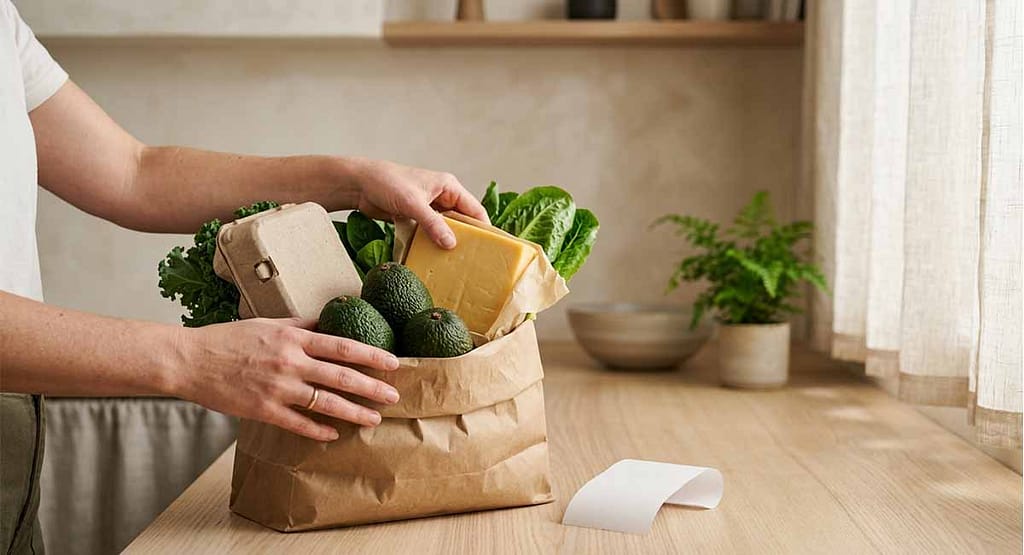
Keto grocery list for beginners, in one line: fill your cart with meat, eggs, fish, low-carb vegetables, full-fat dairy, healthy fats, nuts, and a few berries — and skip the bread, pasta, rice, sugar, and starchy produce. Shop the store’s outer perimeter, keep it to real single-ingredient foods, and stay under 20–30 grams of net carbs a day.
The first keto grocery run is where most beginners freeze up — standing in the produce aisle wondering if a bell pepper is “allowed.” So I built this keto grocery list for beginners the way I wish someone had handed it to me: organized by the aisles you actually walk, with the real net-carb number next to each food so you’re never guessing. No 80-item wall of text — just what to put in the cart, aisle by aisle. To be honest, on my first keto shopping trip, I panicked and over-bought expensive ‘keto-branded’ snacks that just ended up sitting in my pantry. I quickly learned that sticking to the outer perimeter for simple, fresh ingredients like eggs and greens is not only cheaper, but makes the whole process so much easier.
📌 Want this whole list on one page? Grab my free printable Keto Grocery List — the aisle-by-aisle version you can stick on the fridge or pull up at the store.
Table of Contents
How to Build a Keto Grocery List for Beginners
Before the aisles, here’s the one rule that makes every food decision easy: buy whole foods made of fat, protein, and non-starchy vegetables, and skip anything built on flour, sugar, or a starchy root. Stick to that and you’ll stay under 20–30 grams of net carbs a day to start — generally below 50 grams — per Diet Doctor. “Net carbs” means total carbs minus fiber, since fiber doesn’t spike blood sugar.
Do that consistently and most people reach ketosis — the fat-burning state that’s the whole point — in about 2–4 days, usually around day 4, per WebMD. The practical shopping tip that flows from this: shop the store’s outer perimeter, where the meat, produce, eggs, and dairy live, and treat the inner aisles as a quick in-and-out for oils, canned fish, and nuts. Here’s the entire list at a glance — screenshot this one before you go:
| Buy freely | Buy with care | Leave at the store |
|---|---|---|
| Meat, poultry, eggs, fish & seafood | Cheese, cream, full-fat yogurt | Bread, pasta, rice, cereal, oats |
| Avocado, olive oil, butter, coconut oil | Nuts & seeds (portion-aware) | Sugar, candy, soda, juice |
| Leafy greens, broccoli, cauliflower, zucchini | Berries in small amounts | Potatoes, corn, other starchy veg |
| Water, coffee, plain tea | Almond/coconut flour, keto sweeteners | Most fruit, beans & legumes |
Your First Keto Grocery Cart (Start Here)
If a giant list feels overwhelming, don’t shop from it yet — start here instead. Most beginners over-buy specialty “keto” products on trip one and then let real food rot. So this is the minimum viable cart: about sixteen real foods that cover breakfasts, dinners, and snacks for your first week without any fancy ingredients.
Build every meal from a protein, a fat, and a low-carb vegetable, and this short cart quietly makes a dozen different plates. Get comfortable here first, then branch out into the full aisle lists below once you know what you actually eat. Think eggs and bacon for mornings, a rotisserie chicken and ground beef for dinners, and cheese, olives, and nuts to snack on so you’re never stuck reaching for carbs.
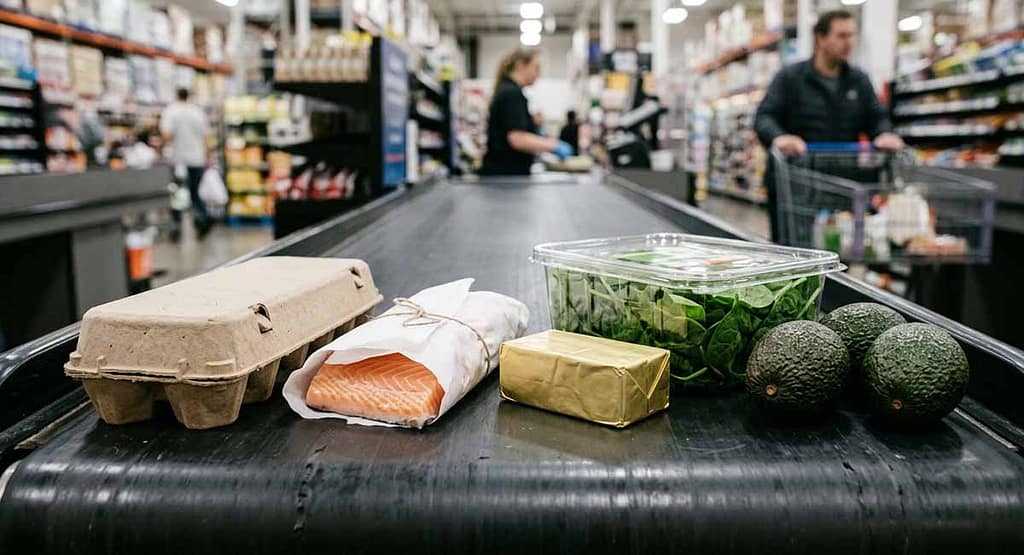
| Category | Your first-trip essentials (≈16 items) |
|---|---|
| Protein | Eggs (2 dozen), bacon, ground beef (80/20), rotisserie or chicken thighs, canned tuna or salmon |
| Vegetables | Baby spinach, broccoli or a broccoli slaw, zucchini, avocados |
| Dairy & fats | Butter, olive oil, block cheddar, cream cheese |
| Snacks / extras | Olives, raw almonds or pecans, a small box of raspberries |
That’s it — one protein + one fat + one veg, repeated with variety, is a full keto week. You don’t need the other aisles to start.
Produce Aisle: Keto Vegetables & Fruit
Produce is where beginners get nervous, but the rule is simple: vegetables that grow above ground are keto; the ones that grow below it aren’t. Leafy greens and other above-ground veg are low in carbs and high in fiber and minerals, while root vegetables like potatoes, carrots, and beets store starch and add up fast. Aim to fill half your cart with the low-carb picks below. For fruit, buy berries in small amounts and leave the rest — fruit is mostly sugar, and even “healthy” fruits blow past your carb budget. Here are the net carbs per 100 grams (about 3½ ounces), per Diet Doctor:
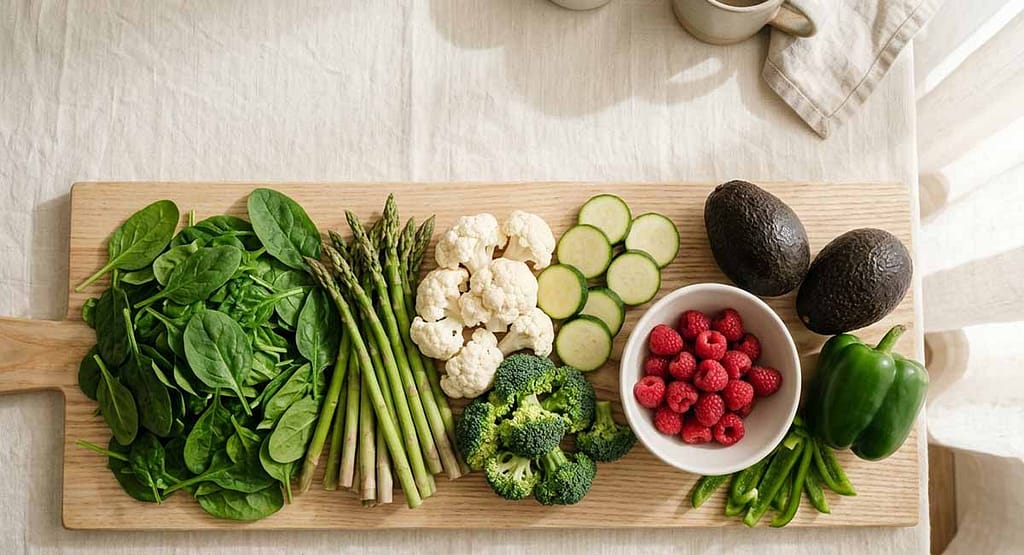
| Keto vegetable | Net carbs (per 100 g) |
|---|---|
| Spinach | 1 g |
| Asparagus | 2 g |
| Avocado | 2 g |
| Cauliflower | 3 g |
| Zucchini | 3 g |
| Cabbage | 3 g |
| Bell pepper (green) | 3 g |
| Broccoli | 4 g |
| Green beans | 4 g |
Anything under about 5 g per 100 g is hard to overdo. For fruit, per Diet Doctor: raspberries and blackberries run 5 g, strawberries 6 g, but blueberries jump to 12 g — double the others, so treat them as a topping, not a bowl. Skip the apples (12 g), grapes (16 g), and bananas (20 g).
Meat, Seafood & Eggs
This is the easiest aisle on keto, because most unprocessed meat, poultry, eggs, fish, and seafood are close to zero net carbs — buy them freely and build your plate around them. Reach for beef, pork, chicken thighs, eggs, salmon, tuna, sardines, and shrimp, and don’t shy away from the fattier cuts: fat is your fuel now, not the enemy. Eggs are the single best-value keto staple, so buy more than you think you need.
The one honest caution is to watch what’s added to protein at the store — breaded coatings, sugary marinades, honey-glazed hams, and sweet-cured bacon quietly smuggle carbs onto an otherwise-perfect food. Check the label on anything pre-seasoned or cured, and pick plain when you can. Canned fish and a rotisserie chicken are your busy-week lifesavers, so keep a couple in the cart every trip.
Dairy & Refrigerated
Full-fat dairy is keto gold, and it lives right on the perimeter next to the meat. Stock up on block cheese, heavy cream, butter, cream cheese, and full-fat plain Greek yogurt — all high in fat, low in carbs, and endlessly useful for adding richness and calories that keep you full. Buy blocks and shred your own when you can; pre-shredded cheese is dusted with starch to stop it clumping, which nudges the carbs up.
A few honest notes: skip the milk (it’s surprisingly sugary — use heavy cream or unsweetened almond milk instead), and choose plain yogurt, because flavored and low-fat versions are loaded with added sugar. If dairy bothers your stomach or seems to stall you, it’s completely optional — plenty of people do keto without it. Grab olives and pickles here too; they’re perfect salty, near-zero-carb snacks for your first week.
Fats & Oils
On keto, fat moves from “the thing to avoid” to “the main event,” so it’s worth having good ones on hand. Put the natural, minimally processed fats in your cart: extra-virgin olive oil, avocado oil, butter, ghee, and coconut oil. They’re essentially zero-carb, they carry flavor, and they keep you full between meals. Olive oil for salads and finishing, butter or avocado oil for higher-heat cooking — that combination covers almost everything you’ll make.
The honest part: you don’t need a cabinet full of special “keto” oils, MCT powders, or expensive supplements to succeed. A good bottle of olive oil and real butter will take you further than anything with a marketing claim on the label. The only fats worth truly avoiding are artificial trans fats (partially hydrogenated oils), since those are the ones actually linked to heart risk — so buy real fats, not the processed imitations.
Pantry & Baking Aisle
The inner aisles are a quick in-and-out on keto — you only need a handful of shelf-stable staples. For cooking, grab canned tuna and salmon, olives, sugar-free marinara, broth or bouillon, and unsweetened almond or coconut milk. If you plan to bake, the swaps are simple: almond flour and coconut flour replace wheat flour, and a keto sweetener replaces sugar. The three worth knowing are erythritol, monk fruit, and stevia — they sweeten without spiking blood sugar. Nuts and seeds live here too, and they’re a great snack, but portion matters because the net carbs vary a lot. Here’s the net carbs per 100 grams, per Diet Doctor:
| Nut / seed | Net carbs (per 100 g) |
|---|---|
| Pecans | 4 g |
| Macadamia nuts | 5 g |
| Walnuts | 7 g |
| Almonds | 9 g |
| Cashews (limit) | 22 g |
Pecans and macadamias are your everyday picks; cashews are basically candy on keto, so leave them off the list.
Frozen & Snacks
Don’t skip the freezer — it’s the cheapest way to keep keto easy on a busy week. Frozen vegetables (broccoli, cauliflower, spinach, green beans) are just as low-carb as fresh, cost less, and never go bad in the crisper drawer before you use them. Frozen berries work perfectly for a small portion over yogurt, and cauliflower rice or riced broccoli saves you prep time on dinners.
For snacks, you rarely need anything from a “keto” package: cheese, olives, hard-boiled eggs, a few nuts, avocado with salt, pepperoni, and pork rinds cover almost every craving for near-zero carbs. If you do buy packaged keto snacks, flip them over and read the label — plenty of “keto” bars and chips carry more carbs (and sneaky sweeteners) than they let on. Real, single-ingredient snacks are cheaper, more filling, and never a surprise.
The Keto Flu Prevention Cart (Don’t Skip This)
Here’s the section almost every grocery list leaves out — and it’s the one that decides whether your first week feels fine or miserable. When you cut carbs, your body sheds water and flushes minerals with it, which is what triggers the dreaded “keto flu”: the headache, fatigue, and crankiness that hit around days 3–4. The fix is to shop for electrolytes on purpose. Per Cleveland Clinic, the three minerals to replenish are sodium, potassium, and magnesium — so buy the foods that deliver them. This one trip is the difference between quitting on day 3 and cruising past it.
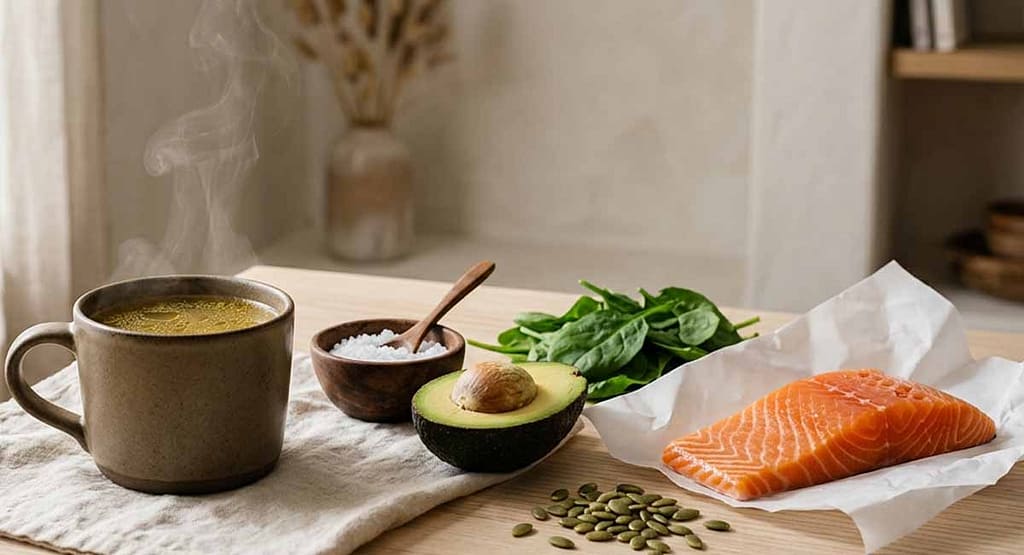
| Mineral | Buy these keto foods | Daily target on keto |
|---|---|---|
| Sodium | Salt (salt your food!), bone broth/bouillon, pickles, olives, cured meats | 3,000–5,000 mg |
| Potassium | Avocado, spinach, salmon, mushrooms, plain yogurt | 3,000–4,700 mg |
| Magnesium | Pumpkin seeds, almonds, spinach, dark chocolate (85%+) | 300–500 mg |
Targets: sodium and magnesium per Virta Health; potassium per Diet Doctor. Food first — prioritize salt and these whole foods, and check with your doctor before potassium or magnesium supplements, especially if you take blood-pressure or diuretic medication.
Keto on a Budget: Smart Swaps at the Store
Keto has a reputation for being expensive, but that’s usually specialty products talking, not real food. The trick is to buy ingredients, not “keto” branding. A block of cheese, a carton of eggs, and a bag of frozen broccoli cost a fraction of pre-made keto snacks and stretch across far more meals. Skip the $9 boxes of keto crackers and cookies — they’re the most expensive way to do this and they’re rarely as low-carb as they claim. Here are the swaps that keep the cart cheap without breaking keto:
| Instead of (pricey) | Buy this (cheaper, still keto) |
|---|---|
| Pre-made egg bites | A carton of eggs — the best value protein there is |
| Pre-cut chicken breast | Whole chicken or bone-in thighs |
| Pre-shredded cheese | A block of cheese you shred yourself |
| Keto bars, crackers & cookies | Eggs, cheese, olives, nuts, pork rinds |
| Fresh out-of-season veg | Frozen vegetables and berries |
| Grass-fed everything | Regular ground beef (80/20) and eggs |
Want the full cheap-keto playbook? I go deeper on stretching every dollar in my keto on a budget guide.
What to Leave at the Store
The “skip” list is shorter than the “buy” list, and it comes down to two words: sugar and starch. Leave these out of the cart and you’re most of the way to ketosis — they’re the foods that quietly push you over your 20–30 g net-carb limit, often in a single serving. Watch the “healthy” impostors too: whole-wheat bread and brown rice are still off the list, and plenty of packaged “keto” products aren’t what they claim.
| Category | Leave these at the store |
|---|---|
| Grains & starches | Bread, pasta, rice, cereal, oats, tortillas, crackers |
| Sugar & sweets | Candy, cookies, cake, ice cream, honey, syrup, soda |
| Starchy vegetables | Potatoes, sweet potatoes, corn, peas, beets |
| Most fruit | Bananas, apples, grapes, oranges, mango, dried fruit |
| Legumes | Beans, lentils, chickpeas |
| Sneaky “keto” products | Sweetened yogurt, oat milk, most keto bars, “sugar-free” candy with maltitol |
One rule covers the gray areas: if it’s built on flour, sugar, or a starchy root — or needs a marketing claim to seem healthy — leave it. Not sure whether a specific food makes the cut? My full keto food list breaks down what to eat and avoid by category, with the net carbs on everything.
📌 Don’t want to rewrite this list by hand? My free printable Keto Grocery List has every aisle and the starter cart on one page — print it for the fridge or save it to your phone.
A Quick Reality Check Before You Shop
Two honest things so your first week doesn’t derail you. First, the scale will drop fast in week one — and most of it is water, not fat. Cutting carbs releases the water your body stores with glycogen, per Perfect Keto, so expect a big early number and then a steadier, slower pace once real fat loss kicks in. That’s normal — don’t panic when it levels off.
Second, keto isn’t right for everyone. If you’re pregnant or breastfeeding, have kidney, liver, or pancreatic disease, or a history of an eating disorder, talk to your doctor first. And if you take an SGLT2 inhibitor for type 2 diabetes, keto can raise your risk of a dangerous condition called diabetic ketoacidosis, per Healthline — check with your doctor before you start. A grocery list can’t replace that conversation.
New to all of this? Start with my complete keto for beginners guide for the big picture, or follow how to start keto in 7 days to turn this cart into your first week of meals.
📌 Ready to shop? Take my free printable Keto Grocery List straight to the store — every aisle plus the 16-item starter cart, ready to check off.
Keto Grocery List: FAQ
-
What should a beginner buy on keto?
Start with about sixteen real foods: eggs, bacon, ground beef, chicken, canned fish, spinach, broccoli, zucchini, avocados, butter, olive oil, block cheese, cream cheese, olives, nuts, and a small box of berries. Build every meal from a protein, a fat, and a low-carb vegetable, and that short list covers a full week.
-
What is the cheapest way to start keto?
Buy ingredients, not “keto” branding. Eggs, whole chicken, ground beef (80/20), block cheese, and frozen vegetables are the best value and stretch across the most meals. Skip pre-made keto bars, crackers, and cookies — they’re the most expensive way to do keto and rarely as low-carb as they claim.
-
What should I not buy on keto?
Leave out grains (bread, pasta, rice, oats), sugar and sweets, starchy vegetables (potatoes, corn), most fruit, and legumes (beans, lentils). Also watch sneaky “keto” products like sweetened yogurt, oat milk, and “sugar-free” candy made with maltitol, which can still raise blood sugar.
-
How many carbs can I have per day?
Start under 20–30 g of net carbs per day (net = total carbs − fiber), and generally stay below 50 g, per Diet Doctor. Keeping carbs strict is what gets most beginners into ketosis in about 2–4 days, usually around day 4, per WebMD.
-
Do I need special keto products or supplements?
No. A good olive oil, real butter, eggs, meat, and non-starchy veg will take you further than anything with a “keto” label. The one thing worth shopping for on purpose is electrolytes — salt, broth, avocado, and leafy greens — to head off the keto flu in week one.
-
Can I do a keto grocery run at any store?
Yes. Keto is built on basics — meat, eggs, produce, dairy, and oils — that every grocery store, warehouse club, and budget chain carries. Shop the outer perimeter first for the fresh foods, then make a quick pass through the inner aisles for oils, canned fish, and nuts.
Everything here is educational and honest to the best of my research — not medical advice. For your personal situation, loop in your doctor. Now go fill that cart with real food you’ll actually enjoy. — Tristina


